

Mobile apps
An app for your customers, a tool for your team, or a first version of an idea. For iOS and Android, with one codebase instead of two wherever it fits.
From nothing, or from what is already there
01
Your customers live on a phone
They arrive on a phone, and all you can hand them is a page in a browser.
02
The team works in spreadsheets
Jobs, stock and site visits live in a chat and in Excel, and half the data is in somebody's head.
03
There is nothing to show the idea on
Describing it no longer works. It has to be put in someone's hands to see what they do with it.
04
There is an app, and it was abandoned
It sits in the store, has not been updated, and no longer starts on the current version of the system.
From a first version to the app stores
 01
01An app for your customers
Catalogue, orders, personal account, notifications.
 02
02An app for your team
Jobs, stock, site visits. Reported from a phone, not from a spreadsheet in the evening.
 03
03A first version
The shortest way to put the idea in real hands.
 04
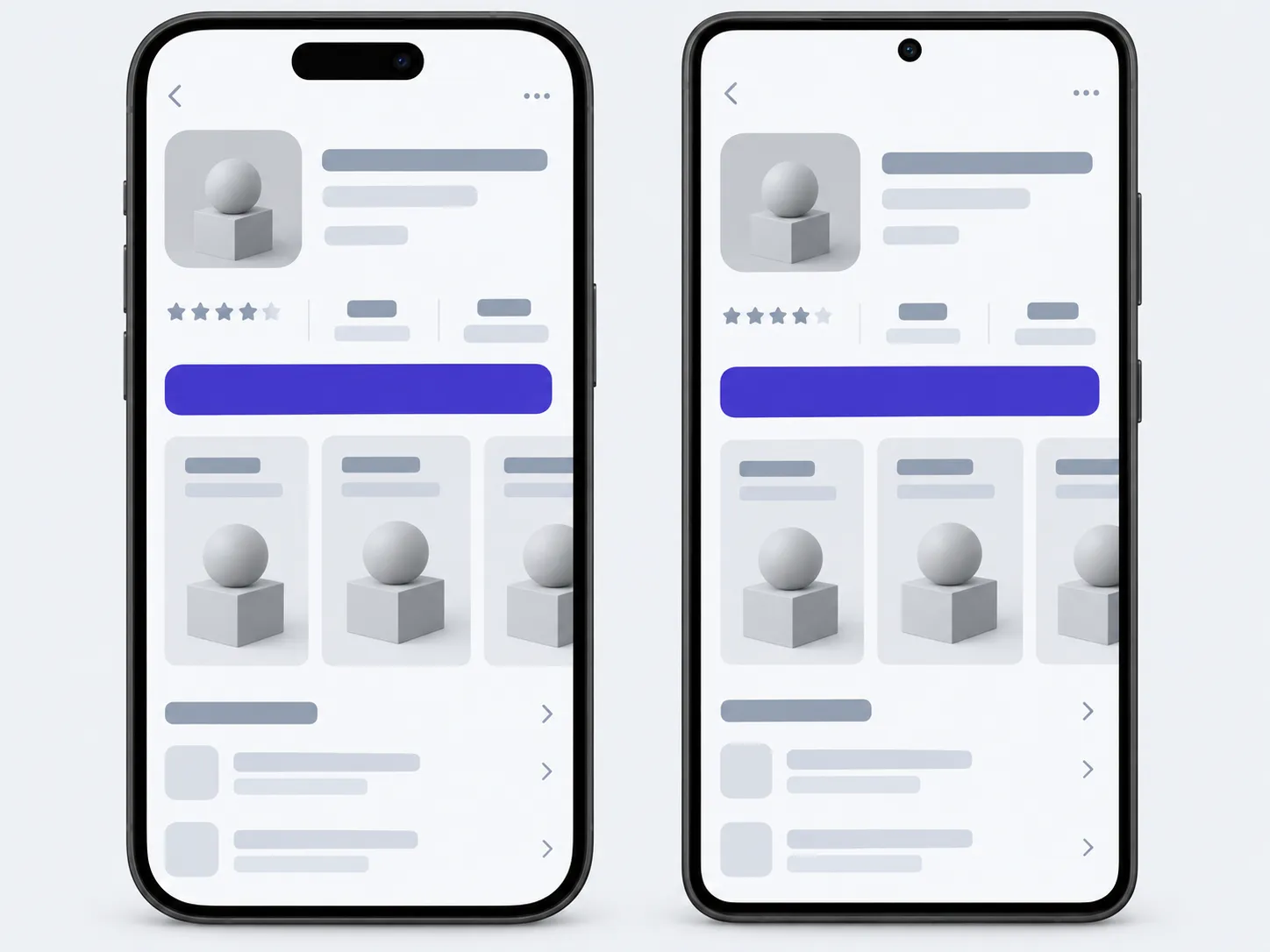
04Publishing to the App Store and Google Play
We handle publishing and store review. The accounts are registered to you.
A stack any developer can take over
We choose it for the job and name it before we start. It decides what support will cost and how easy it is to find another developer later.
- The app itselfCross-platform or native, whichever fits the job
- FlutterDartKotlinSwiftiOSAndroid
- Data and sign-inWhat an account rests on
- FirebaseSupabasePostgreSQLRESTGraphQLSign in with Google and Apple
- Money and notificationsWhat makes an app worth opening twice
- Apple PayGoogle PayStripeIn-app purchasesPush notifications
- What is insideThe ordinary things people ask for most
- Maps and locationCamera and code scannerOffline modeChat and supportDark mode
- Stores and life after launchHow the app reaches people and keeps working
- App Store ConnectGoogle Play ConsoleTestFlightCrashlyticsFirebase Analytics
From the first call to launch
01
The call
You tell us what the app has to do and who it is for. The questions after that are ours to ask.
02
Prototype
How it works, before the first line of code. Changing a decision here costs hours.
03
Build
Screens, data, integrations. A test build on your own phone instead of screenshots.
04
Publishing and after
App Store, Google Play, crash reports. After release we stay in touch.
What we do by default
These are not separate options or a line on the invoice. We work this way on every project, and you can look at it while the work is still running.
- 01Speed
- We check start-up and scrolling on weak phones.
- 02Accessibility
- Large text from the system settings, labels for screen readers, readable contrast.
- 03Devices
- iOS and Android, small and large screens, real devices next to the emulator.
- 04Languages
- As many as you need. A new language uses the same mechanism, with no separate app.
- 05Stores
- Description, screenshots and categories in the App Store and Google Play, ready for review.
- 06Handover
- The code, the developer accounts and every access are in your name.
You will not have to write a brief
01
Someone who decides
One person on your side who says yes and collects the edits. When they arrive from three people at once they contradict each other, and the work has to be redone.
02
Facts, not finished copy
What you do, who for, what makes you different. We can write the text; we cannot invent the facts.
03
Photos and material
Your own photo always beats a stock one. If there is none, we generate it in your palette.
04
Access, if anything exists
Domain, hosting, accounts, the old site or app. So we do not rebuild what already works.
What people ask before the first email
How much does it cost?
It depends on what exists and what has to come out, so we work it out after a short call. A project or a stage that is clear up front gets a fixed price. Work with someone else's code, bug hunting and tasks with an undefined scope are paid hourly: nobody can price in advance what they have not seen yet.
Support and development go by a monthly package of hours. TODO(owner): exact rates and a minimum budget have not been decided.
How long does it take?
It depends on the scope. After the call we name a date and keep to it. If anything moves, you hear it straight away rather than on the delivery date.
What do I end up with?
An app in the App Store and Google Play, the source code and every access. The developer accounts are registered to you.
What does store publishing cost?
That is paid to the stores themselves: Apple charges $99 a year, Google $25 once. The accounts are registered to you.
What if an app already exists?
We look at the code and at what happened to it. Then it is our rework and support service.
Who will actually do the work?
The people who answer your email. You talk to them directly.


Tell us what the app has to do, and we will say where its first version starts
- 01A link
to the site, the mock-up or the repository, whatever exists
- 02What to change
one sentence on what should become different
- 03Who it's for
who will use it: your customers, your team, and how many